
About
Margarita Azurdia Arimany was born in the city of Antigua Guatemala in 1931. Her parents were Augusto Azurdia andConcepcion Arimany, both born in Catalonia, Spain. At the age of thirteen, following the death of her father, she was sent with her two sisters to Toronto, Canada, to study in the boarding school, Loretto College School. In 1948, she returned to Guatemala and, at the age of seventeen, married businessman Carlos Fanjul. At the end of the 1950s, she temporarily moved to Palo Alto, California, where she began to explore fine arts. Without any prior training, she enrolled in a series of art and welding workshops offered by the San Francisco Art Institute. Her continuous visits to museums and artistic spaces in the area brought her closer to the new aesthetics of painting and she began to delve into informal painting and North American abstract expressionism.
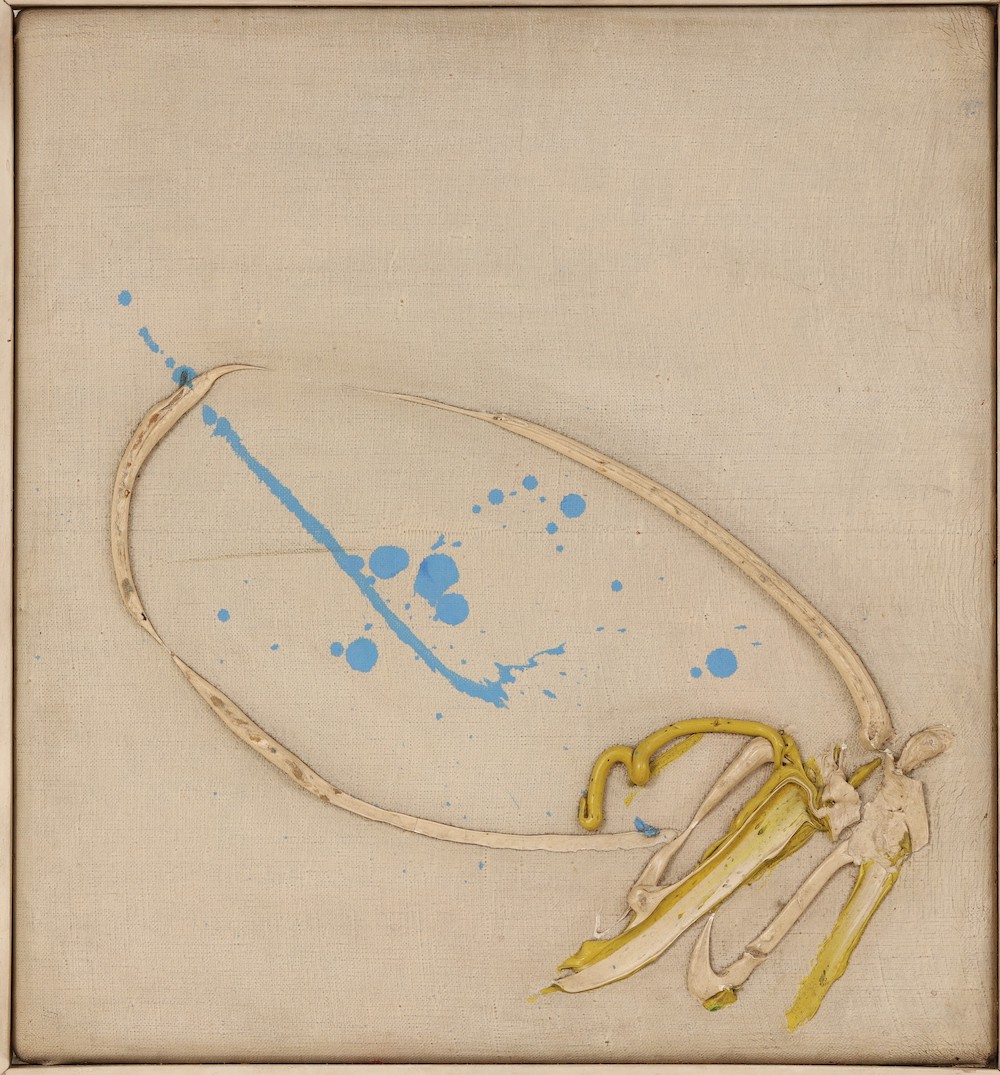
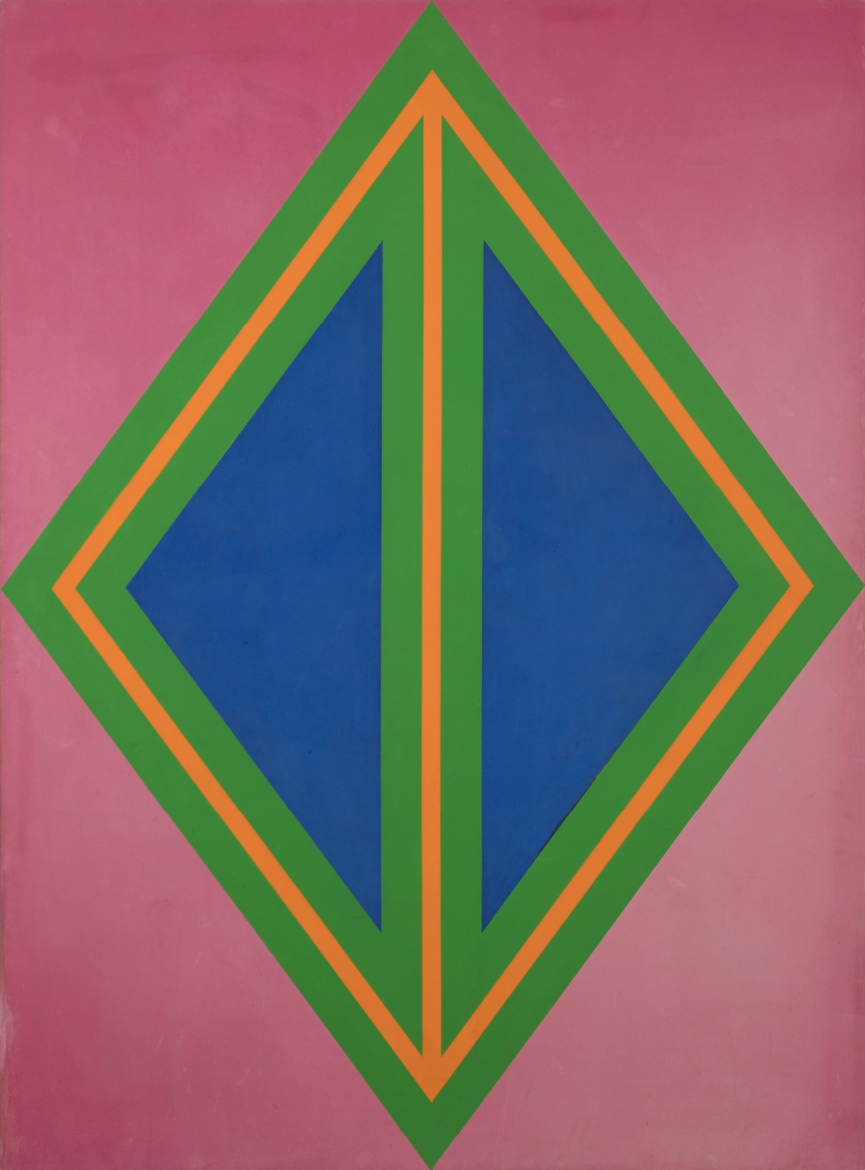
Back in Guatemala, Azurdia held her first personal exhibition. The inauguration took place on January 15th, 1963, in the lobby of the Cruz Azul building. She presented a group of oil paintings with expressionist strokes and a reduced palette. This exhibition was held simultaneously with another exhibition of hers at the National School of Plastic Arts, where she exhibited her Óvalos series, made up of paintings with concentric oval shapes in contrasting colors. In 1964, she began her series later known as Geometric Paintings or, simply, Geometricasthat uses rhombuses, lines and flat colors with great contrasts to provoke acertain optical dynamic. These paintings contributed to marking a turning point in Guatemalan modernity and sophistication in the national artistic scene. In 1968, she exhibited her Geometricas at the DS Gallery and the Cisneros Gallery in New York. During these years, Azurdia made a series of minimalist sculptures that she exhibited at the Vittorio gallery, of which the only evidence left was a series of photographs in which she appears next to the works.

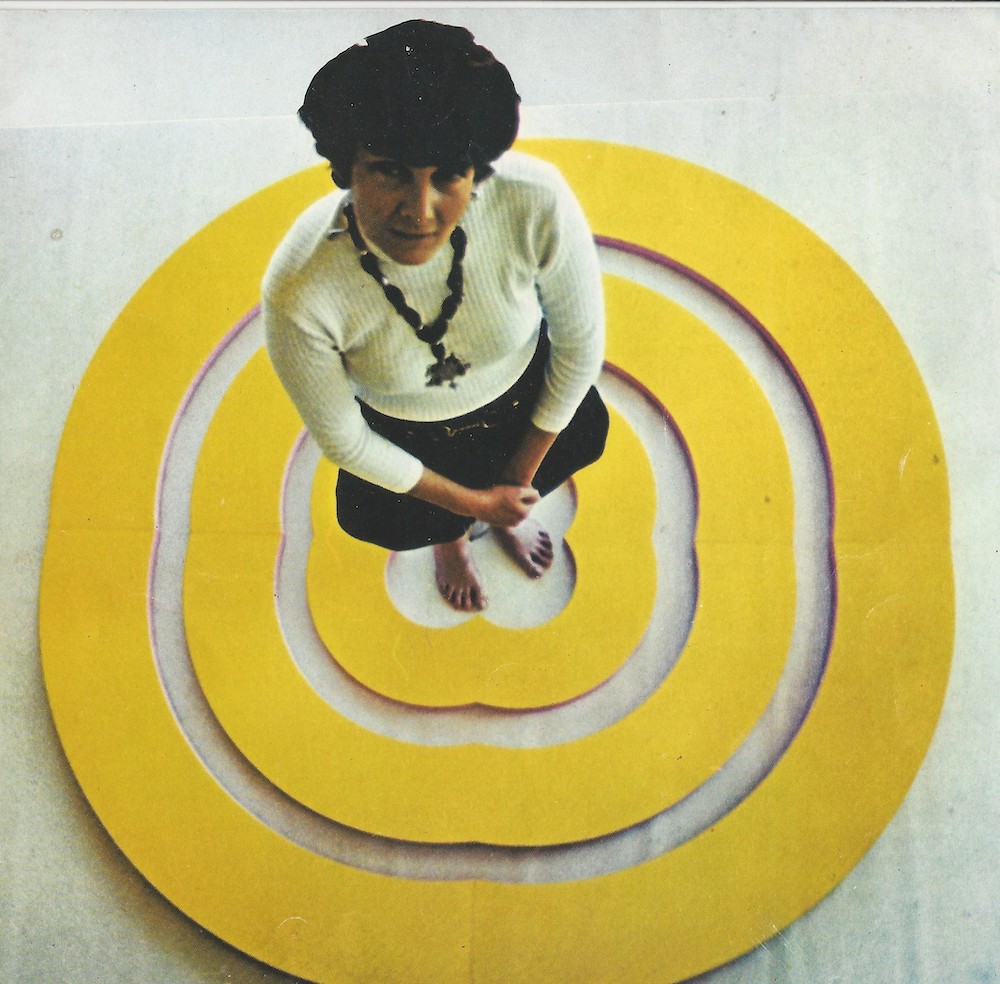
In 1969, Margarita Azurdia was invited to participate in the 10th Sao Paulo Biennial, where she obtained an honorable mention for her series Asta 104. This series was composed of five large sculptural paintings that she identified with the titles Átomo, Tótem, Tríptico, Lotus and Personna.
A year later, Azurdia was invited to participate in the third Independent Salon of Mexico (1970), held in the rooms of the University Museum of Science and Art (MUCA). The Independent Hall had been operating since 1968 as an adverse reaction to the so-called Solar Exhibition, the cultural event held within the framework of the XIX Olympic Games in Mexico. Against official discourse, thirty-five artists declined the invitation and proposed holding a first independent exhibition. The third room, to which Azurdia was invited to, determined as a rule, that the participating artists were to use cardboard and other materials to create ephemeral environments. Three of the five pieces from Asta 104 (Lotus, Tríptico and Personna)were accepted and were most likely destroyed along with the rest of the works from the exhibition to adhere to the overall ephemeral concept of the exposition itself.
Also in 1970, Margarita Azurdia participated in the II Coltejer Art Biennial (Medellín, Colombia) where she presented her project, "Por favor quitarse los zapatos," which was an installation with performative and interactive elements. Spectators were invited to take off their shoes before entering the venue. Guided by a dim light, they walked on a layer of fine, wet sand that covered the interior floor. Two years later, Azurdia participated in the III Coltejer Art Biennial(1972) with a series of marble sculptures. Composed of individually sculpted geometric elements mounted on metal pivots, these exceptional pieces rotated to subvert the classical premises of representation of the sculptural medium.

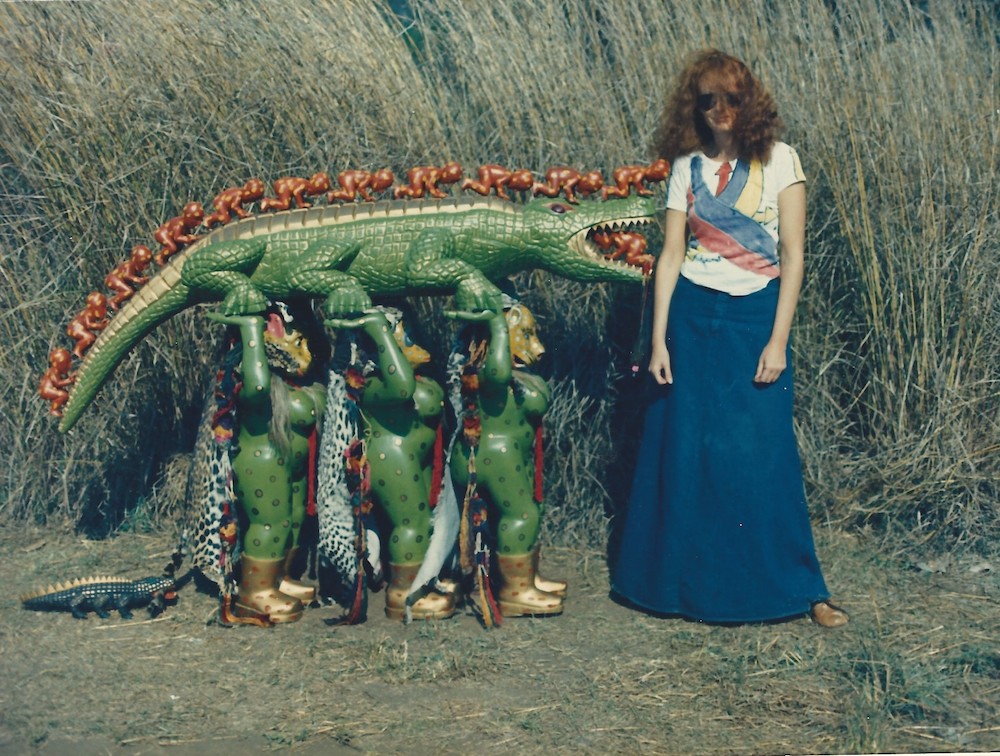
Between 1971 and 1974, Margarita made her series of sculptures known as Homenaje a Guatemala. Originally, the collection was made up of fifty direct wood carvings that she commissioned from carpenters based in Antigua Guatemala. They interpreted the drawings and instructions given by the artist and turned them into three-dimensional zoomorphic figures and other representations that took as references characters and elements of local culture. Back in her studio, Azurdia intervened with designs and patterns that are largely reminiscent of her first geometric works. They were also decorated with handmade objects, feathers, headdresses, animal skins and masks, among other things. The result was a series of montages that evoke the altars of the towns of the Guatemalan highlands, where cultural and religious syncretism is evident, as a product of the complex history of Guatemala.
When Azurdia concluded the Homenaje a Guatemala series, she went to live in Paris. Near the Bastille district, she found an apartment that, due to its small size, forced her to step away from working large formats and explore drawing and writing poems. She began attending dance classes in experimental centers such as La Forgue, where NoraParissy taught. Margarita also joined groups that followed postmodern trends from the United States and Japan that gave her new possibilities of looking at and understanding the movement of the body. In that epicenter of ideas, Azurdiabegan to attend circles of female artists that encouraged her to trace a before and after in her own feminine and artistic conceptions. In addition to being absorbed by drawing and dance, she concentrated on writing and illustrating several books: El Encuentro de Una Soledad—presented within the framework of the group exhibition organized by the gallery Au Lieu d'images—and 27 apuntes de Margarita Rita Rica Dinamita in 1979; Desflashbacks de la vie de Margarita par elle même in 1980, Rencontres parMargarita Azurdia y 26 anotaciones de Margarita Azurdia in 1981.

The year 1982 is remembered as one of the bloodiest years in the lives of Guatemalan and that same year, Margarita Azurdia returned to Guatemala after living eight years in Paris. She immediately convened with the small contemporary dance scene that was beginning to form in private studios where jazz dance and improvisation courses were taught. In one of them she met the artists, Benjamín Herrarte and Fernando Iturbide who shared her concerns in the exploration of movement. With them she formed the Laboratory Collective, later identified as the Laboratorio de Creatividad, a multifaceted project that began to formulate ideas around body movement. They began to appear in art galleries, cultural centers, hotels, theaters or cafes, but also in portals, parks, neighborhoods and city streets. Like a manifesto, its members expressed: “We have joined together and formed a group called Laboratory. We work experimentally and that's why we call it that. It was created because we felt the need to achieve greater communication between the public and the artist through different forms of expression. At present we are carrying out research work on the origins of ritual or sacred dance under two aspects: individual and social. In its individual manifestation we work on dialogue with the inner self, with its god or god, meditative state, poetic interpretation and visualization. We do this in the workshop. In its social manifestation we work by going directly to the street or to public places. Contact work with the group that we then take to the public to study the result of our reactions as well as those of the public. For us, the beauty of movement comes more from its authenticity, from reflecting internal processes than from adjusting to previously established forms. Through the Laboratory we want to establish contact with the universal essence of the individual and thus achieve a common language.”
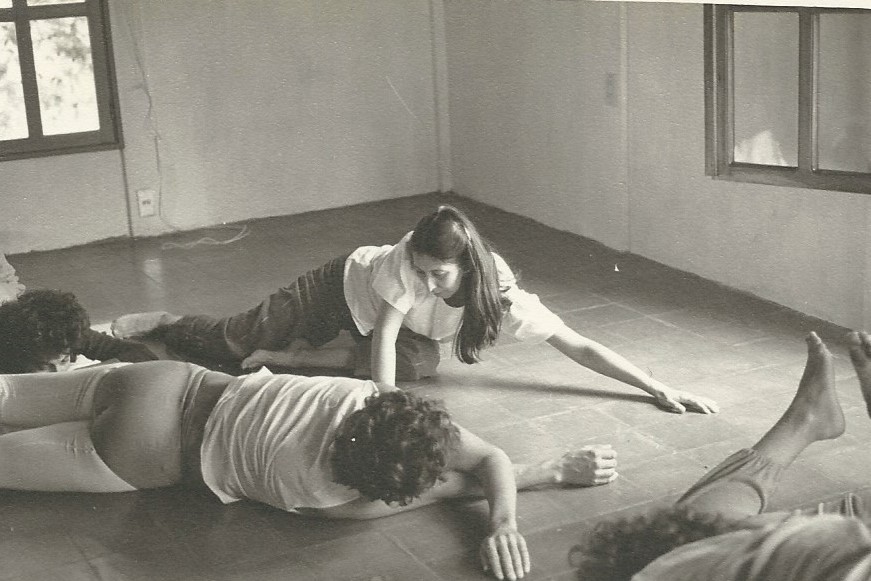

The group was very active between 1983 and 1985. Their contribution to performative art and body art in Guatemala was to introduce forms of expression that took place in public spaces and subverted the modernist premise of art as a means to formally represent different events or situations with concrete meanings. It was one of the first glimpses of the possibility to investigate art forms with ephemeral, ritual, recreational or collective characteristics. With the incursions of Margarita Azurdia and the Laboratoriode Creatividad, proof emerged that postmodernity thought and experience were possible in a peripheral country like Guatemala.
In January 1984, Azurdia carried out one of her first performative projects dedicated to the Mother Goddess and the last one she would carry out in the company of the members of the Creativity Laboratory. She openly called on people to demonstrate against the authorities of the Municipality and their project to remodel the Plaza Obelisco, in Guatemala City. This included the removal of the flower pots with rose bushes that were traditionally found in the park and their replacement with cement tiles. The experience increased Margarita Azurdia's interest in continuing to develop work around the ideas of care and healing, linked to nature and the environment. As part of that transition, Margarita invited a group of women to participate in a multidisciplinary exhibition at the Ixchel Museum of Indigenous Costume, in Guatemala City, which was inaugurated on July 7, 1983. The collective exhibition included works by the artists Jamie Bischof, Merche Jiménez, Imogen Sieveking and Milena Prem. Margarita and the dancer Lucrecia Herrera performed a dance that motivated criticism for its “lack of rigor.”
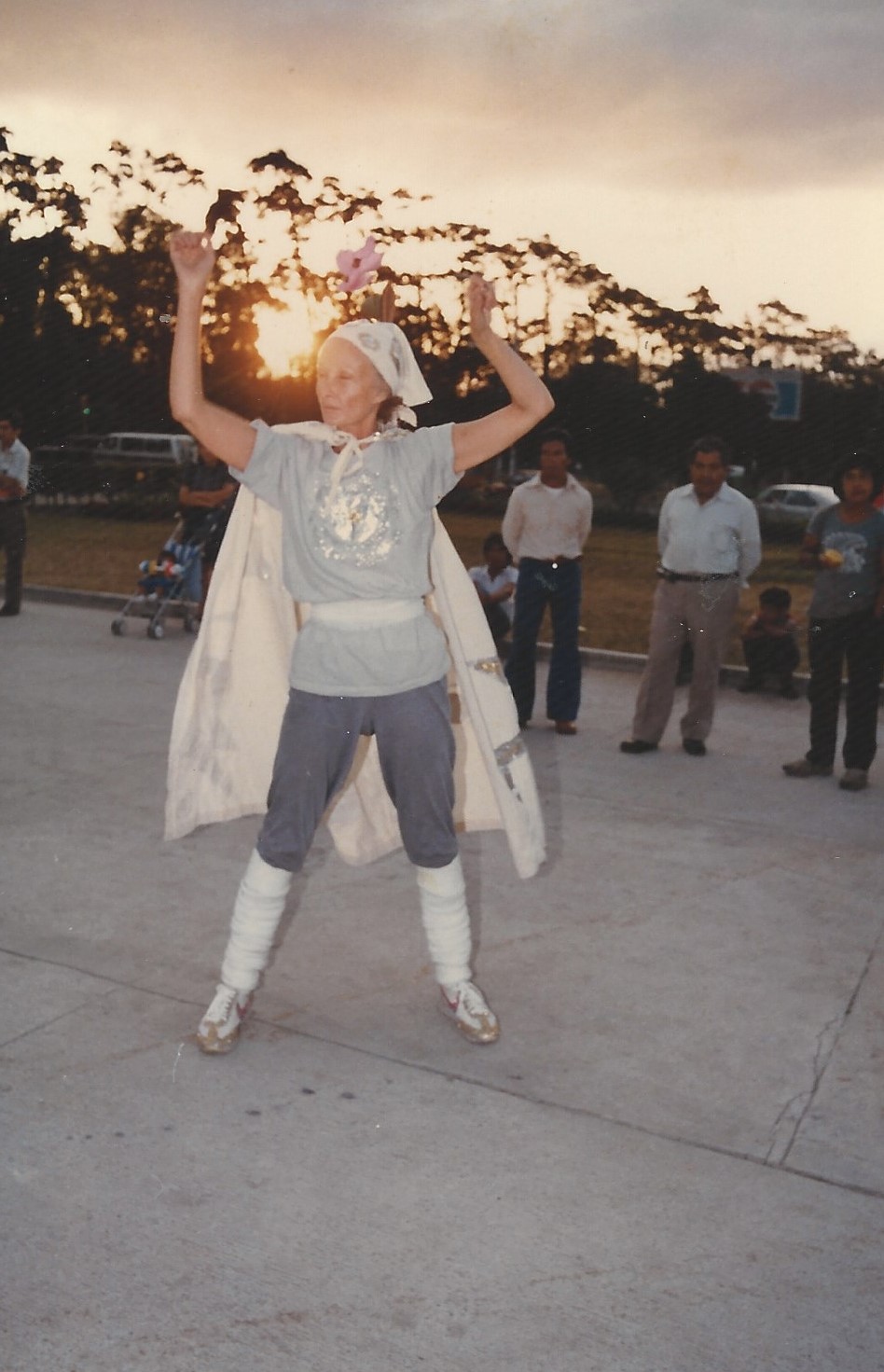
After the Laboratorio de Creatividad disintegrated, Margarita continued delving into body movement, but from the territory of women's history, particularly female deities and their ancient rituals. From a feminist perspective, it led to the recognition of the female body as a center of spirituality. She taught workshops in her home studio and her country house. Her interest in the spirituality of art and her devotion to the Mother Goddess was always present, seen through her representations of fertility and feminine energies related to the earth, nature and life in general.
One of her final works, titled Proceso de Transformación. Tormento – Encuentro – Integración (1992) summarizes the meaning of her personal journeys and searches. In this last stage, she adopts the name Anastasia, in homage to the slave Anastasia, an emblematic figure in the history of Brazil who, in the 18th century, endured many hardships. During the whippings and insults given by her master, she would respond, “I am not a slave, I am free.” Azurdia also made a series of collages she referred to as self-portraits which held elements with great symbolic meaning. In these years, Azurdia was a regular attendee at the Omega Institute in New York. Founded in 1977 by Eastern scholar Pir Vilayat Inayat Khan, holisticphysician Stephan Rechtschaffen, and educator Elizabeth Lesser, it emerged a tthe epicenter of North American countercultures and Eastern philosophies as the basis of a new global spirituality.

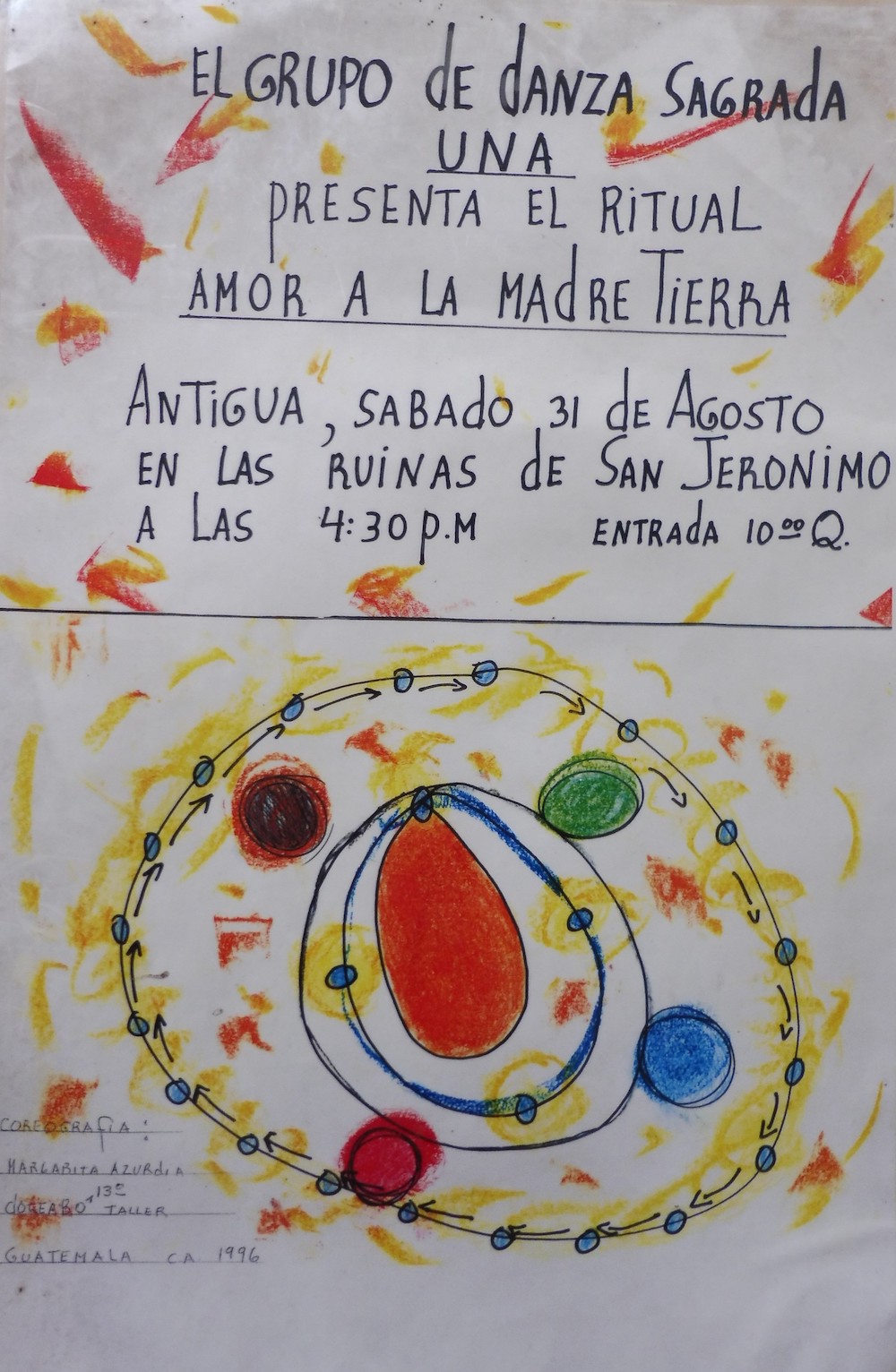
All this learning would shape her most important ritual, the Ceremonia de amor a la diosa GaiaGaia, within the framework of an exhibition titled Indagaciones, at the Sol del Río gallery, in 1994. This consisted of a walk by a group of women ranging in age, through the gardens and gallery rooms, playing instruments that emitted light, rhythmic sounds. The group ended their transit in the space designated for the artist's exhibition, with its walls covered in paper printed with rose motifs and a series of news articles about attacks on nature. This ceremony and the series of paintings and drawings titled Recuerdos del planeta tierra (ca.1990), showed the great respect that the artist had for nature and animals.
With amazing energy, Azurdia continued participating in biennials and exhibitions. In the mid-1990s, she began planning the publication of a new book, for which she asked the artist Irene Torrebiarte to make a series of photographic records while she danced and carried out rituals. She also created two altars dedicated to the Mother Goddess. Inside old wardrobes, she brought together a series of objects and images that were carefully selected to symbolize her devotion and journey through art and spirituality. Margarita Azurdia died on July 1, 1998.

